|
|
|
|
|
| Anemometers |
| |
|
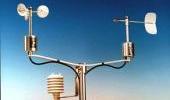
Our A100 Series Anemometers are robustly constructed using weather resisting plastics, anodised aluminium and stainless steels enabling them to withstand continuous exposure to the weather, including marine environments, making them suitable for a wide range of applications where accuracy and sensitivity are important.
The A100 series anemometers all share the same basic construction and use the same R30 series 3-cup Rotors. Different internal modules and components are used to provide various output signals. The use of a precision ball-race mounted shaft ensures the essential low threshold speed and good repeatability. The outline and mechanical design, common to all the A100 series, remains largely unchanged since the introduction of the original Porton™ Anemometer in 1972, the electronics modules being continuously developed during this time to provide a well tried, durable and reliable product.
Anemometers have, until recent years, only been calibrated/evaluated in wind tunnels. Investigation by the wind power industry has found that various anemometer designs behave differently in field conditions where there is considerable turbulence. The Vector Instruments A100 design is one of a very few which has been subjected to field trials, and these have shown that Vector Instruments' A100L2, A100LK, A100K and A100LM anemometers (using the R30/K2, R30/K and R30/M3 rotors) are amongst the very few cup anemometer designs which can be classified as having "First Class" performance according to the requirements of the IEC61400-12-1 when suitably sited and operated. This high performance classification means that measurements are accurate in the actual wind conditions experienced in the field (as opposed to just being accurate in the artificial conditions of a low-turbulence wind tunnel) making them the clear choice for wind assessment applications.
In operation, the wind causes the rotor to rotate at a speed proportional to the wind speed. This rotation is sensed in our optoelectronic anemometers using a slotted disk and an optical beam. In the case of the switching anemometer the rotation is sensed using a balanced system of magnets and a reed-switch.
Options common to all the anemometers include anti-icing heaters, marine versions/rotors and mounting adaptors and anti-surge protection.
See also:Anemometers for Wind Turbine Testing and Wind Farm Site Assessment.
additional information regarding obtaining the highest accuracy measurements with our instruments.
MEASNET calibrations and IEC classification/standards.
What is the difference between "M" and "K" type instruments (e.g. A100LM and A100LK) ?
Do I have to use a "K" instrument to measure the wind speed in knots and a "M" instrument to measure in m/s ?
What is the A100R/K variant and why/when should it be used?
What is the "K" in A100R/K for?
|
| Anemometer Selection Table: |
|
Type
|
Pulse/Frequency Output
|
Resolution
|
Power Supply Required
|
Additional Features
|
Typical Applications
|
|
A100L2
|
0..1500Hz = 0..150Knots (10Hz per
Knot) nominal)
|
0.05m
|
6.5 to 28V DC powered (@1.5mA typical)
|
First Class, Low power, Analog/Voltage Output:
0..2.5v = 0..150Knots nominal
|
Datalogger/AWS/WindAssessment
|
|
A100LK
|
0..1500Hz = 0..150Knots
(10Hz per Knot nominal)
|
0.05m
|
4.75 to 28V DC powered
(@1mA typical)
|
First Class, Low power
|
Datalogger/AWS/WindAssessment
|
|
A100LM
|
0..750Hz = 0..75m/s
(10Hz per m/s nominal)
|
0.1m
|
4.75 to 28V DC powered
(@1mA typical)
|
First Class, Low power
|
Datalogger/AWS/WindAssessment
|
|
A100R/K
|
1 pulse per revolution
(1.287m wind-run = 0.777Hz per m/s nominal)
|
1.25m
|
No power required
|
First Class, bounce-free mercury-wetted reed switch,
optimal cosine response
|
Datalogger/AWS/WindAssessment
|
| |
|
A100M
|
0..750Hz = 0..75m/s
(10Hz per m/s nominal)
|
0.1m
|
10 to 30V DC powered
(@35mA max)
|
Anti-Surge
|
Industrial/control/PLC
|
|
A100K
|
0..1500Hz = 0..150Knots
(10Hz per Knot nominal)
|
0.05m
|
10 to 30V DC powered
(@35mA max)
|
Anti-Surge
|
Industrial/control/PLC
|
|
A100S
|
1 pulse per revolution
(1.25m wind-run = 0.8Hz per m/s nominal)
|
1.25m
|
10 to 30V DC powered
(@35mA max)
|
Anti-Surge
|
Industrial/control/PLC
|
|
A100R
|
1 pulse per revolution
(1.25m wind-run = 0.8Hz per m/s nominal)
|
1.25m
|
No power required
|
bounce-free mercury-wetted reed switch
|
Datalogger/AWS/PLC
|
Available anemometer types include:
- Low-Power Optoelectronic, Analog/Voltage AND Pulse/Frequency Output
- A100L2 Anemometer
(ideal for most data-loggers)
- Low-Power Optoelectronic, Pulse/Frequency Output
- A100LM and A100LK Anemometers
(also ideal for most data-loggers)
- Zero-Power, Contact-Closure (Reed Switch)
- A100R Anemometer
(lowest power of all, suitable for most dataloggers)
- Optoelectronic, Pulse/Frequency Output
- A100M and A100K and A100S
Anemometers
(suited for connection to PLCs)
- Analogue/Voltage Output
- Porton A100 and A100H Anemometers
|
|
Unlike some other manufacturers, we do not manufacture a "combined" wind speed and wind direction sensor. With our product range you have the flexibility to chose an anemometer and windvane with appropriate output signals and mount them together at the top of a mast using one our 405-1 series mounting arms.
We do not manufacture "generator" type anemometers either, nor do we manufacture equipment for generating power from the wind (although our anemometers are commonly used for surveying and evaluating the suitability of a site for wind power generation).
|
|
|
|
|

|
Windspeed Limited (trading as Vector Instruments),
115 Marsh Road, RHYL, North Wales, LL18 2AB, United Kingdom
Tel: +44 (0) 1745 350700 Fax: +44 (0) 1745 344206
Email: sales@windspeed.co.uk
|
|
Website design and content is copyright (c) 2003-2010 Windspeed Limited (unless otherise stated). All trademarks are acknowledged.
|
|